How to Manage Stress: 7 Stress Management Techniques sets the stage for this enthralling narrative, offering readers a glimpse into a story that is rich in detail with casual formal language style and brimming with originality from the outset.
Readers will delve into a comprehensive guide on stress management techniques, mindfulness, meditation, physical activities, and relaxation methods to enhance overall well-being and productivity.
Stress Management Techniques
Stress management techniques are essential tools that can help individuals cope with the challenges of daily life and improve overall well-being. By incorporating these techniques into daily routines, individuals can enhance their productivity and lead a more balanced life.
1. Deep Breathing Exercises
Deep breathing exercises involve taking slow, deep breaths to help calm the mind and reduce stress. By focusing on your breath, you can center yourself and alleviate feelings of anxiety or tension.
2. Regular Exercise
Engaging in regular physical activity can help reduce stress levels and promote the release of endorphins, which are natural mood lifters. Whether it’s a brisk walk, yoga, or weight training, exercise can be a powerful stress-reliever.
3. Mindfulness Meditation
Practicing mindfulness meditation involves being fully present in the moment and observing your thoughts without judgment. This technique can help you manage stress by promoting relaxation and mental clarity.
4. Time Management
Effective time management can help reduce feelings of overwhelm and increase productivity. By prioritizing tasks, setting realistic goals, and avoiding procrastination, you can better manage stress levels.
5. Healthy Eating Habits
Eating a balanced diet rich in fruits, vegetables, and whole grains can support your overall well-being and help manage stress. Avoiding excessive caffeine, sugar, and processed foods can also contribute to a more stable mood.
6. Social Support
Connecting with friends, family, or a support group can provide emotional support during times of stress. Sharing your feelings and experiences with others can help you feel more understood and less alone in your struggles.
7. Relaxation Techniques
Engaging in relaxation techniques such as progressive muscle relaxation, visualization, or aromatherapy can help calm the mind and body. Finding activities that bring you joy and relaxation can be a powerful antidote to stress.
Mindfulness and Meditation
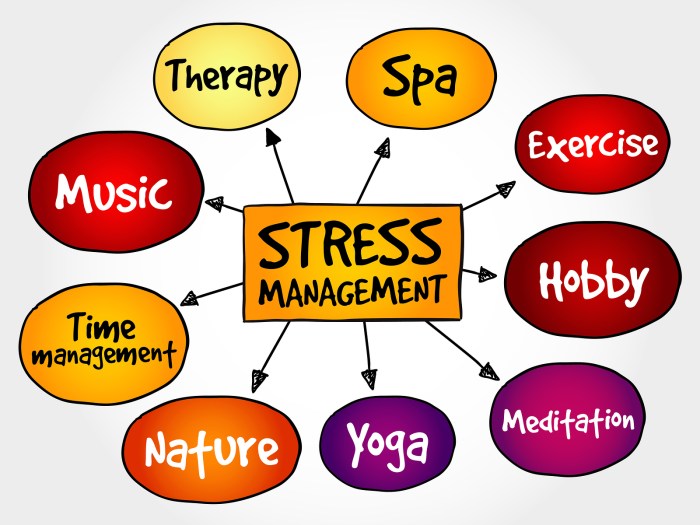
In the realm of stress management, mindfulness and meditation play crucial roles in helping individuals cope with stress and promote overall well-being.
Mindfulness involves being fully present and aware of your thoughts, feelings, and surroundings without judgment. It allows you to acknowledge stressors without becoming overwhelmed by them. On the other hand, meditation is a practice that involves focusing your mind and eliminating the stream of jumbled thoughts that may be crowding your mind.
Mindfulness Exercises for Stress Reduction
- Body Scan: Start from the top of your head and gradually move down, paying attention to each part of your body and releasing tension as you go.
- Deep Breathing: Take slow, deep breaths, focusing on the sensation of air entering and leaving your body. This can help calm your mind and reduce stress.
- Mindful Walking: Pay attention to each step as you walk, feeling the ground beneath your feet and the movement of your body. This can help ground you in the present moment.
The practice of mindfulness and meditation can help individuals develop a greater sense of self-awareness and emotional regulation, leading to reduced stress levels and improved mental health.
Physical Activities and Relaxation Techniques
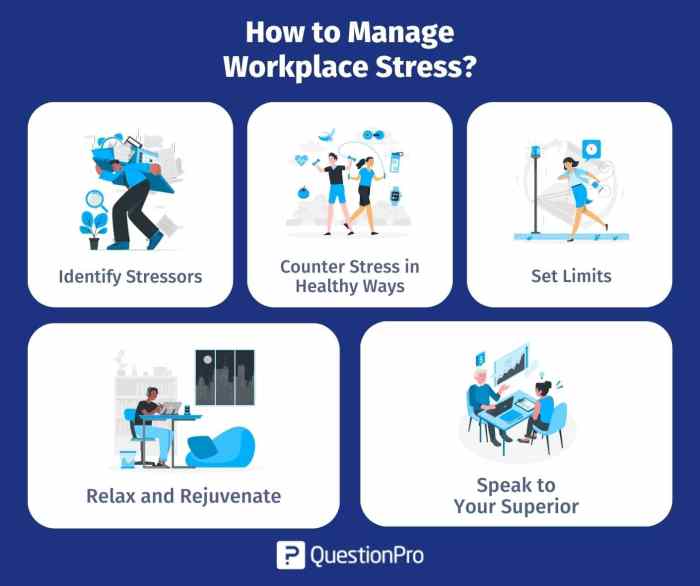
Engaging in physical activities and practicing relaxation techniques are essential for managing stress effectively. These techniques can help you unwind, release tension, and improve your overall well-being.
Physical Activities for Stress Management
Physical activities play a crucial role in reducing stress levels. Here are some effective activities that can help you manage stress:
- Yoga: Practicing yoga can help increase flexibility, reduce stress, and promote relaxation through breathing exercises and meditation.
- Exercise: Regular exercise, such as jogging, swimming, or cycling, releases endorphins that can boost your mood and reduce stress.
- Dance: Dancing is a fun and energetic way to relieve stress, improve physical fitness, and enhance your mood.
- Hiking: Spending time in nature while hiking can help clear your mind, reduce stress, and improve your overall well-being.
Relaxation Techniques for Stress Management
Relaxation techniques are effective in calming the mind and body, helping you cope with stress more effectively. Here are some relaxation techniques you can practice:
- Deep Breathing: Take slow, deep breaths to relax your body and calm your mind. Focus on your breath and feel the tension melting away.
- Progressive Muscle Relaxation: Tense and then relax each muscle group in your body, starting from your toes and working your way up to your head. This technique helps release physical tension and promote relaxation.
- Mindfulness Meditation: Practice mindfulness meditation to increase self-awareness, reduce stress, and improve your overall well-being.
Connection Between Physical Relaxation and Mental Well-being
Physical relaxation techniques, such as yoga and deep breathing, have a direct impact on mental well-being. When your body is relaxed, it signals to your brain to release stress hormones, promoting a sense of calm and relaxation. By incorporating physical activities and relaxation techniques into your daily routine, you can effectively manage stress and improve your mental health.
Final Summary
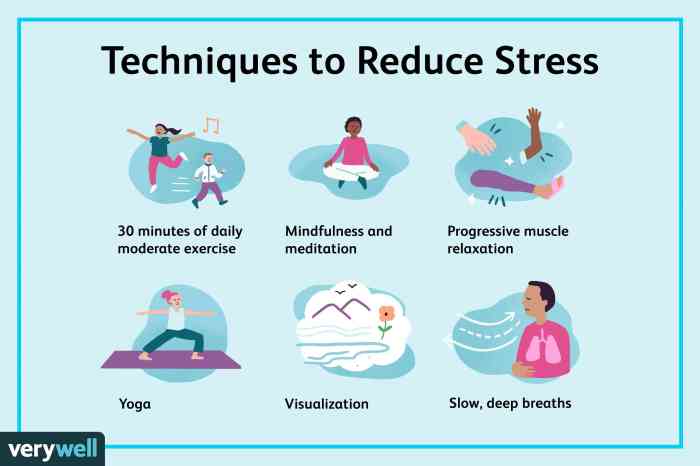
In conclusion, mastering the art of stress management through these techniques not only promotes a healthier lifestyle but also boosts mental clarity and productivity. Implementing these strategies can lead to a more balanced and fulfilling life.